The Strategic Blueprint
Define your project, test the budget, and decide how involved you want to be. Work through feasibility, financing, site viability, and the risks that could stop a build before committing to land or design fees.
A working guide for custom home owners
Make informed decisions about land, design, bids, and construction. Building Blueprint gives you the course, worksheets, and calculators to plan your build and manage the cost.
Five modules · Lifetime access · Worksheets included
Define your project, test the budget, and decide how involved you want to be. Work through feasibility, financing, site viability, and the risks that could stop a build before committing to land or design fees.
Evaluate land before you buy. Understand zoning, access, soil, water, and the inspections your site needs. Work through permits, ownership structure, insurance, and the cost of carrying the property.
Hire an architect and assemble the engineering team. Learn to read construction documents, ask useful questions, and evaluate cost reductions while protecting the design you want to build.
Prepare a bid package, compare contractor proposals, and understand what the contract includes. Plan financing and draws, with guidance for owners hiring a general contractor or managing the build themselves.
Follow construction from sitework and foundations through finishes. Know what to review, when decisions are needed, and how to handle changes. Finish with commissioning, the punch list, and closeout paperwork.
Not ready for the full set? Module One is the go / no-go decision — start there for $150.
All three tools are free, no signup to start. An email unlocks your full breakdown.
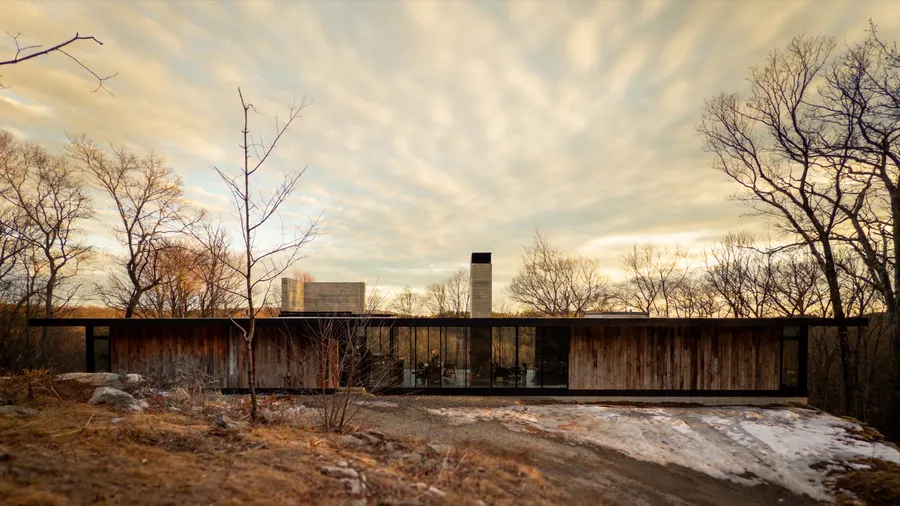
In 2018 we began working with a renowned architect to design our home in the Hudson Valley, New York. We broke ground in 2021 and ended up owner-building the project ourselves — not out of bravado, but because every bid came back hundreds of thousands of dollars higher than the project needed to cost, even at the peak of the pandemic supply-chain crunch. We finished in 2023. Everything in this system is drawn from that build and the projects we’ve helped with since.
Our own build is one example of the decisions the course covers. These are our project results.
Read our story →
You’re planning a custom build or a major renovation, somewhere between one and ten million in hard cost. You’ve either found the land or are close to it, and the numbers either work or you suspect they don’t quite.
You’ve received a contractor’s estimate that came back well over what you expected, and you know that asking for a ten-percent cut and crossing your fingers is not a plan. You want to know whether a bid is inflated, reasonable, or a warning. You’re willing to put in hours where they produce real savings — which is almost always before the first shovel goes in the ground.
If that’s you, the Blueprint was written for the exact position you’re in.
You’re doing a kitchen, a bath, or a remodel whose scope doesn’t require a coordinated design team. You’re already a licensed builder or developer with ten-plus projects behind you; most of this will be familiar. You want the decisions made for you (the architect, the GC, the vendor schedule, the finish choices) and you’re comfortable paying a premium to hand that judgment off.
You’re looking for a course on how to frame a wall or pour a slab. There are better resources for that work; this isn’t one of them. Our subject is the decisions an owner makes before and around the trade work — the ones that determine whether the project delivers the house you designed.
A structured intake, so the day starts at the real questions, not the introductions.
Your budget, your bids, your contract, your schedule — worked the way we work our own.
A written memo of everything decided and recommended, and a 30-day window for follow-up questions as you act on it.
The lesson on change orders and RFIs during construction is worth the price of admission on its own. I would have paid 5x this.
Talk about overdelivering. The Gantt chart from their own build let me walk into our GC meeting prepared, and the suggestions I brought led to revisions that pulled our timeline forward — sequences a very experienced GC hadn’t flagged as things we could run in parallel, but ultimately agreed we could. The lessons are crisp, and these are clearly people who have done the work.
In my sixty-year career as an architect, I have never encountered anyone quite like Peter and May.
We retained them to help us with the challenges of building an ambitious house design 3,000 miles from our home. They helped us assemble an extraordinary team of professionals and steered us through a potentially difficult entitlement process. They have done this with calm authority and high spirits. We are lucky to have found them.
What once felt like a distant dream now feels well within reach. Their knowledge and network of contractors helped us keep costs down without compromising on quality.
They have lived the process of building a beautifully designed home themselves, and so their experience, perspective, and attention to detail have been invaluable.
Owner-led isn’t about how much you do yourself — it’s about how informed you are. At one end of the spectrum, you act as your own GC and coordinate every trade. At the other, you hire a GC and let them run the site. Either way, you understand the bids, the contract structure, and the trade-offs well enough to tell a reasonable call from a bad one. Not cynical, not naive. The point is simple: never sign something you don’t understand, and never defer a decision whose consequences land on you.
Not at all. The curriculum starts with Vision & Feasibility (goals, ROI, budget) before it touches anything technical. If you can run a complex project at work, you can run this.
Totally fine. Most of our students hire a GC but use the course to stay informed. Informed clients get transparent bids, cleaner contracts, and faster answers, because they speak the language.
Self-managing typically saves 20–35% on hard construction costs. On a $2M build, that’s $400K–$700K. Even if you hire a GC, the bid-leveling and contract strategies alone can save $50K–$150K. One avoided late-stage change order pays for the entire system.
Absolutely. Every workflow in the course, from feasibility modeling through bid-leveling and pay-application review, applies just as well to a major renovation or addition. Where a topic is genuinely new-build specific, we flag it and show the renovation alternate.
The system is designed for builds in the $1M–$10M range, but the principles scale — the frameworks are the same at $1.2M and at $8M.
The strategic frameworks for budgeting, risk control, and sequencing are universal. Where U.S.-specific details arise, like AIA contract references or domestic financing products, we flag them and point you to local equivalents. You’ll also have access to the community channel, where students outside the U.S. compare notes.
Yes. The core principles are durable; we refresh the material as practice changes, and the private community is where the day-to-day gets discussed.
Most owner-builder content is designed for budget homes and DIY trades. Building Blueprint is built for high-design, architect-led projects where the stakes, and the potential savings, are higher. We built an Olson Kundig home. This is the system we used.
Each module is a mix of short videos (10–15 minutes on average), spreadsheets, PDFs, and working tools. Access is immediate and for life, including future updates, so you can work through a module in a weekend or return to it phase-by-phase as the build progresses.
A 30-day satisfaction guarantee. If Building Blueprint isn’t what you expected, email [email protected] within 30 days of purchase for a full refund.
Plan your next decision with the full course, worksheets, and calculators.
Lifetime access · All future revisions included
Character
Grade
We’re writing Character Grade with Schiffer Publishing — part memoir, part photographic record, part technical guide, drawn from this build and the ones that followed. Leave an email and we’ll write to you when it ships.